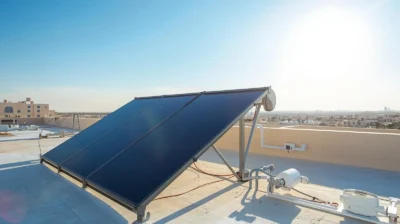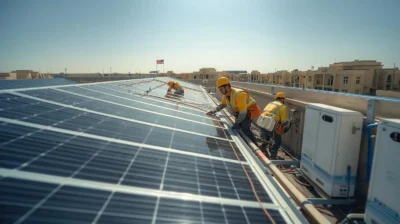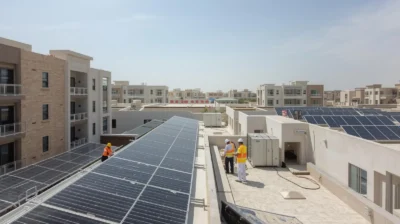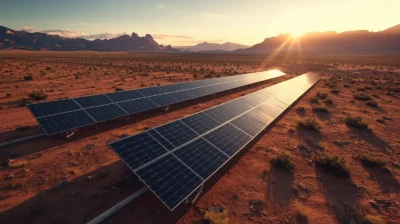

When a solar project involves anything beyond a straightforward residential rooftop — a commercial facility, an industrial compound, an agricultural operation, or a large-scale ground-mounted array — the engineering phase is not a preliminary formality. It is the work that determines whether the project delivers on its projections or becomes an expensive problem to fix after the fact.
Understanding what an EPC model means in the context of solar, and why the design phase carries so much weight, is important for anyone commissioning a significant solar installation in the Kingdom.
What EPC Actually Means in Solar Projects
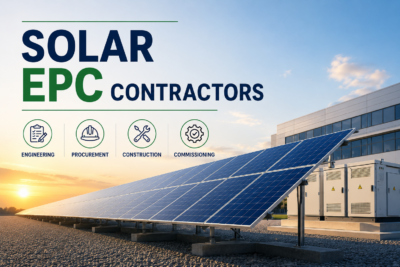
EPC stands for Engineering, Procurement, and Construction. A solar EPC contractor in Saudi Arabia assumes responsibility for all three: the technical design of the system, the procurement of all equipment and materials to that design, and the construction and commissioning of the installation. Under a full EPC model, the client has a single point of accountability for the entire project rather than managing separate design consultants, equipment suppliers, and installation contractors who may not coordinate effectively with each other.
For large or complex solar installations, this single-source accountability is not just a convenience — it closes the gaps where projects most commonly run into difficulties.
Why the Engineering Phase Cannot Be Rushed
Solar system designing in Saudi Arabia for commercial and industrial applications involves considerably more than calculating how many panels will fit on a roof. A proper engineering study analyses the facility’s load profile — how much energy is consumed, when it is consumed, and how that consumption varies across seasons and operational shifts. The system is then sized and configured to match that profile rather than simply maximising panel count.
Single-line diagrams, equipment layout drawings, cable sizing calculations, protection coordination studies, and grid connection documentation all need to be completed to the relevant standards before procurement begins. Skipping or abbreviating this phase leads to systems that are either undersized for actual demand, oversized for the available infrastructure, or designed in ways that create maintenance problems down the line.
Procurement: Where Project Quality Is Often Won or Lost
A solar EPC service in Saudi Arabia that manages procurement properly will source equipment that meets the specification rather than substituting cheaper alternatives once the contract is signed. This matters more than many clients appreciate. Solar panels, inverters, mounting systems, and DC combiners have substantial performance variation at similar price points, and the differences show up in long-term energy yield rather than in an initial visual inspection.
For projects in Saudi Arabia specifically, procurement should also confirm that equipment carries appropriate certifications for the Kingdom’s grid connection requirements, desert operating conditions, and any applicable SASO or SEC standards.
Construction and Commissioning Standards
The construction phase of a solar project involves electrical work, civil or structural work for mounting, and careful sequencing to ensure safety during energisation. The commissioning process — testing every circuit, confirming protection settings, verifying output against the modelled projection — is the final quality gate before handover.
A project handed over without proper commissioning documentation has no baseline against which future performance can be measured. That matters significantly when a performance issue emerges three years into operation and there is no record of what the system was producing when it was new.
The Long-Term View
A well-executed solar EPC contractor in Saudi Arabia relationship does not end at practical completion. Our solar energy services are built around the understanding that engineering quality shows itself over years, not weeks. That is why our
maintenance and upgrades services continue the engineering relationship after handover, ensuring the system performs to design intent across its full operational life.
Frequently Asked Questions
What does an EPC contractor do for solar projects?
A solar EPC contractor takes full responsibility for Engineering the system design, Procuring all equipment and materials to that design, and Constructing and commissioning the completed installation. This single-source model means the client deals with one accountable party rather than coordinating between separate design, supply, and installation entities.
What is included in a solar EPC contract in KSA?
A comprehensive EPC contract in Saudi Arabia typically covers site survey and energy assessment, system design and engineering documentation, equipment procurement and delivery, civil and electrical construction, commissioning and testing, handover documentation, and a defined defects liability period. The exact scope varies by project size and type.
How is solar system design done for large projects in Saudi Arabia?
Large projects involve detailed load analysis, solar resource assessment using on-site or satellite irradiance data, system sizing and configuration modelling, single-line and layout drawings, equipment specification, protection and safety engineering, and grid connection documentation. This work is typically carried out by licensed engineers and reviewed by the relevant utility or authority before procurement begins.
How do I compare EPC contractors for a solar project in Saudi Arabia?
Compare contractors on their technical engineering capability, experience with projects of similar size and type in the Kingdom, quality of equipment specifications, references from completed projects, and the clarity of their contract regarding what is and is not included. Price is a factor, but projects that fail to deliver on design projections typically cost far more to fix than the saving made at contract award.
What approvals are required for commercial solar projects in Saudi Arabia?
Commercial and industrial solar installations connected to the grid in Saudi Arabia typically require approval from the Saudi Electricity Company or the relevant distribution authority, SASO compliance for equipment, and building permits for structural modifications. Off-grid projects have fewer regulatory touchpoints but still require engineering documentation. Your EPC contractor should manage this process as part of the project scope.