
On-Grid Solar System Installation
Seamless installation of grid-connected solar systems that reduce energy bills and support sustainable energy usage.
Site Survey & Load Analysis
Assess roof structure, electrical connections, and available space.
Analyze energy consumption patterns to determine system size and capacity.
System Design & Layout Planning
Develop a customized system design based on the client’s energy needs, site conditions, and project requirements.
Plan optimal panel placement, inverter configuration, and string sizing to maximize efficiency and performance.
Prepare detailed structural, electrical, and mounting layouts using professional design tools such as AutoCAD and Sketch Up, and simulate system performance with PVsyst for accurate energy predictions.
Equipment Selection
Choose high-efficiency solar panels, inverters, mounting structures, and safety components.
Ensure compatibility and long-term performance for grid-connected systems.
Installation & Electrical Integration
Install solar panels, mounting hardware, inverters and cabling with precision.
Integrate the system with the main electrical panel and utility grid.
Implement grounding, surge protection, and safety measures.
Testing & Quality Verification
Conduct full system testing, including performance checks and electrical inspections.
Verify compliance with engineering specifications and safety standards.
- Smart Savings
Reduce Electricity Costs with a Reliable On-Grid Solar Solution
As electricity consumption continues to increase, more homeowners and businesses are looking for practical ways to reduce energy expenses without compromising reliability. One of the most effective solutions is on-grid solar system installation, a renewable energy system that works in connection with the utility grid to generate clean electricity and optimize energy usage.
At Narsect Renewable, we provide professional on-grid solar system installation services across Saudi Arabia, helping residential, commercial, and industrial clients transition to cost-effective solar energy solutions. Our team focuses on delivering systems that are engineered for efficiency, long-term performance, and maximum return on investment.
- Smart Investment
Why Are More Property Owners Choosing On-Grid Solar Systems?
Traditional electricity costs can have a significant impact on monthly expenses, especially for properties with high energy consumption. While renewable energy has become increasingly accessible, many people are unsure which solar solution best fits their requirements.
An on-grid solar system offers a practical balance between sustainability and affordability. Since the system remains connected to the utility grid, property owners can use solar-generated electricity during daylight hours while maintaining access to grid power whenever required.
This setup eliminates the need for large battery storage systems, making it one of the most cost-efficient solar energy options available today.
- Solar Basics
What Is an On-Grid Solar System?
An on-grid solar system, also known as a grid-tied solar system, is designed to generate electricity using solar panels while remaining connected to the local electricity network. A professionally planned on-grid solar system installation ensures all components work together efficiently to maximize energy production and cost savings.
The system typically consists of:
01
Solar Panels
Solar panels capture sunlight and convert it into direct current (DC) electricity.
02
Solar Inverter
The inverter converts DC electricity into usable alternating current (AC) electricity for homes and businesses.
03
Grid Connection
The system remains connected to the utility grid, allowing seamless energy supply when solar production is lower.
04
Monitoring System
Advanced monitoring tools help track energy generation and system performance in real time.
- Grid Benefits
Benefits of On-Grid Solar System Installation
Choosing an on-grid solar solution provides several advantages for property owners in Saudi Arabia.
Lower Electricity Bills
Solar energy generated during the day helps reduce dependence on conventional electricity, lowering monthly utility expenses.
Cost-Effective Investment
Since battery storage is typically not required, installation costs are generally lower than hybrid or off-grid systems.
Reliable Energy Access
The connection to the utility grid ensures a continuous power supply whenever solar generation is insufficient.
Environmentally Friendly Energy
Solar power reduces dependence on fossil fuels and supports sustainable energy goals.
Long-Term Financial Savings
A well-designed solar system can generate significant savings over its operational lifespan while increasing property value.
- Energy Evaluation
Is an On-Grid Solar System Right for Your Property?
Many customers ask, “How do I know if an on-grid solar system is suitable for my home or business?”
A professional assessment helps determine whether an on-grid solution can deliver the desired performance and savings.
At Narsect Renewable, our specialists evaluate every project individually to ensure the system is aligned with the customer’s energy requirements and investment objectives.
The answer depends on several factors:
- Current electricity consumption
- Available installation space
- Roof orientation and sunlight exposure
- Energy usage patterns
- Long-term financial goals
- Utility connection availability
- Project Execution
Our On-Grid Solar Installation Process
We follow a structured process to ensure every installation meets the highest standards of quality and efficiency.
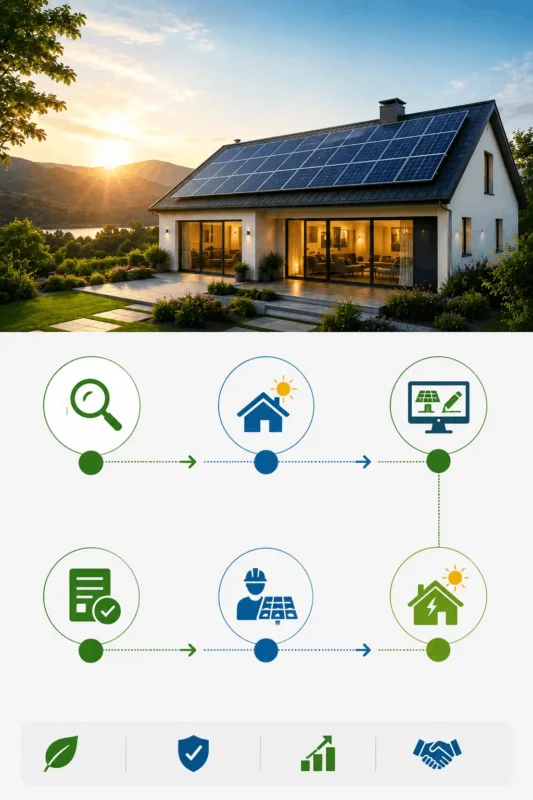
Initial Consultation
We discuss your energy goals, electricity usage, and project requirements.
Site Assessment
Our team evaluates the property, available installation area, and solar potential.
System Design
A customized solar solution is developed based on energy consumption and site conditions.
Professional Installation
Qualified technicians install the system according to industry best practices and safety standards.
Testing and Commissioning
The system is thoroughly tested to ensure optimal performance and grid compatibility.
Ongoing Support
We provide technical assistance, monitoring guidance, and maintenance recommendations to support long-term efficiency.
- Project Planning
Important Considerations Before Installing an On-Grid Solar System
Before proceeding with an installation, property owners should consider.
Addressing these factors early helps ensure the project delivers maximum value and long-term performance.
- Energy consumption patterns
- Roof condition and available space
- Expected return on investment
- Equipment quality and warranties
- Future energy requirements
- System maintenance needs
Why Choose Narsect Renewable?
At Narsect Renewable, we combine technical expertise, quality workmanship, and customer-focused service to deliver reliable solar energy solutions. Our team understands the unique environmental conditions and energy requirements across Saudi Arabia, enabling us to design systems that perform efficiently in local conditions.
From consultation and design to installation and support, we are committed to helping customers make confident renewable energy investments.
Start Your Solar Journey Today
A professionally executed on-grid solar system installation can help reduce electricity costs, improve energy efficiency, and support a more sustainable future. Whether you are a homeowner looking to lower utility bills or a business seeking long-term energy savings, Narsect Renewable provides customized solutions designed to meet your goals. Contact our team today to learn how an on-grid solar system can help you maximize the benefits of solar energy while maintaining reliable access to grid power.
Frequently Asked Questions
An on-grid system remains connected to the utility grid, while an off-grid system operates independently using battery storage.
Yes. Solar-generated electricity can significantly reduce the amount of power purchased from the utility provider.
In most cases, no. The system uses the utility grid as a backup power source, eliminating the need for large battery storage systems.
The timeline depends on project size and complexity, but most installations are completed after site assessment, design approval, and system setup.